https://youtu.be/N3mJf1FLw9I?si=r4b2yTTdK_VBucbp
“Teach Me to See” is a joyful, Bahá’í-inspired song about the power of spiritual understanding.
We are a Baha'i family, born & raised in Egypt. We love to share our thoughts and views on a few topics based on Baha'i principles, such as family life, education, human rights and the environment.
https://youtu.be/N3mJf1FLw9I?si=r4b2yTTdK_VBucbp
“Teach Me to See” is a joyful, Bahá’í-inspired song about the power of spiritual understanding.
https://youtu.be/H9FjvVFZ_xk?si=PusQ_CTgRexFkC4E
يا نُورَ النّور، يا نُورًا فَوقَ كُلِّ نُور،
يا مُظهِرَ كُلِّ ظُهور، يا رَحمنُ يا رَحيم هذا الدعاء الروحاني من آثار الديانة البهائية،
وهو مناجاة تعبّر عن التوجّه إلى الله باعتباره نور الأنوار ومصدر كل ظهور.
"The well-being of mankind, its peace and security, are unattainable unless and until its unity is firmly established" from the Writings of Bahá'u'lláh.
When you walk into any country or even a city on earth, most likely you will find a small group of Baha'is including Youth in neighbourhood who decided to serve their community and start a service project.
Four Questions submitted to Baha'u'llah by Haji Mirza Sayyid Muhammad (the Bab's Uncle). the questions led to the revelation of the Kitab-i Iqan.
What was previously believed is that the promised resurrection will take place in another world. The raising of the dead (hashr wa nashr), the Bridge (sirat), the accounting of the deeds of all creatures, and the reward or punishment of those deeds will take place in that world. However, it is all in this world, and it has taken place. And the days of the appearance of every manifestation of the truth (or manifestation of God: mazhar-i haqq) constitute that same day of resurrection for the period preceding it. In this new revelation, there has been no punishment for men's deeds. Nay, the rebelliousness and corruption of the people of tyranny and oppression have increased, even if the real meaning of reward and punishment is nearness or distance from the divine court. This subject is the same, regardless of which world it occurs in. The people of truth in this world, since they exist in God's good pleasure, are in a state of well-being; but they are outwardly caught in the grip of the people of oppression, and are troubled by them. The people of oppression, although they are tormented by being far from the court of God, are outwardly in a state of comfort, and by reason of their innate ignorance (ghaflati ki darand), are unaware of that torment. If the requital for men's deeds (jaza-yi a'mal) and the promised punishment (? the text reads thawab-i 'iqab-i maw'ud, which makes imperfect sense and could be in error for thawab wa 'iqab-i maw'ud, meaning the promised reward and punishment) is this (i.e. as described above), and there is no other world than this one, where will the oppressed seek vengeance from the one who oppressed him, and where will the people of punishment receive their desserts. This would be nothing but a denial of the promised resurrection. I have not understood this subject properly, yet it is among the most important of matters to understand it.
في كينية المعاد وبعث الأجساد وحقيقة الثواب والعقاب
Reference; https://bahai-library.com/muhammad_questions_kitab_iqan
"Judgment is not an oral trial or interrogation, but rather tests individuals to see whether they possess the inner insight to recognize the divine light of the new Messenger or allow worldly prejudices to blind them. "
"Being "dead" or in "tombs" symbolizes a state of spiritual ignorance and waywardness, while the "cleaving of the heavens" means the superseding and annulling of a previous religious dispensation to make way for a new divine truth"
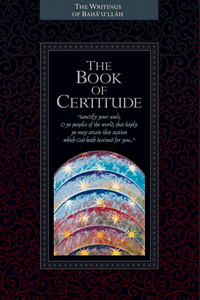
Baha’u’llah, the prophet and founder of the Baha’i Faith, revealed The Book of Certitude in 1861/62 in the span of two days and two nights. He wrote this treatise in response to questions asked by one of the maternal uncles of the Bab — the herald and forerunner of Baha’u’llah. The Kitab-i-Iqan fulfills “the prophecy of the Báb, Who had specifically stated that the Promised One would complete the text of the unfinished Persian Bayán” — a volume that the Bab wrote around 1847 before he was martyred in 1850.

Shoghi Effendi summarized The Book of Certitude in the following words:
Within a compass of two hundred pages it proclaims unequivocally the existence and oneness of a personal God, unknowable, inaccessible, the source of all Revelation, eternal, omniscient, omnipresent and almighty; asserts the relativity of religious truth and the continuity of Divine Revelation; affirms the unity of the Prophets, the universality of their Message, the identity of their fundamental teachings, the sanctity of their scriptures, and the twofold character of their stations; denounces the blindness and perversity of the divines and doctors of every age; cites and elucidates the allegorical passages of the New Testament, the abstruse verses of the Qur’án,
…enumerates the essential prerequisites for the attainment by every true seeker of the object of his quest; demonstrates the validity, the sublimity and significance of the Báb’s Revelation; acclaims the heroism and detachment of His disciples; foreshadows, and prophesies the world-wide triumph of the Revelation promised to the people of the Bayán; upholds the purity and innocence of the Virgin Mary; glorifies the Imáms of the Faith of Muḥammad; celebrates the martyrdom, and lauds the spiritual sovereignty, of the Imám Ḥusayn; unfolds the meaning of such symbolic terms as ‘Return,’ ‘Resurrection,’ ‘Seal of the Prophets’ and ‘Day of Judgment’; adumbrates and distinguishes between the three stages of Divine Revelation; and expatiates, in glowing terms, upon the glories and wonders of the ‘City of God,’ renewed, at fixed intervals, by the dispensation of Providence, for the guidance, the benefit and salvation of all mankind.
https://www.bahai.org/library/authoritative-texts/bahaullah/kitab-i-iqan/1#990539395
Bahá'u'lláh exhorts His followers to consort,
with amity and concord and without discrimination,
with the adherents of all religions;
warns them to guard against fanaticism, sedition, pride, dispute and contention;
inculcates upon them immaculate cleanliness,
strict truthfulness, spotless chastity, trustworthiness;
hospitality, fidelity, courtesy,
forbearance, justice and fairness;
counsels them to be "even as the fingers of one hand and the limbs of one body";
calls upon them to arise and serve His Cause; and assures them of His undoubted aid.
Shoghi Effendi, God Passes By

Fasting and obligatory prayer are as two wings to man's life.
Blessed be the one who soareth with their aid
in the heaven of the love of God,
the Lord of all worlds.
Bahá’u’lláh
==========================================
These are the days of the Fast. Blessed is the one who through the heat generated by the Fast increaseth his love, and who, with joy and radiance, ariseth to perform worthy deeds. Bahá’u’lláh
====================================
Verily, I say, fasting is the supreme remedy and the most great healing for the disease of self and passion. Bahá’u’lláh
=============================
Fasting is the cause of the elevation of one's spiritual station. ‘Abdu’l-Bahá
In clear cases of weakness, illness, or injury the law of the Fast is not binding. This injunction is in conformity with the precepts of God, eternal in the past, eternal in the future. Well is it with them who act accordingly. Bahá’u’lláh
Verily, I say, fasting is the supreme remedy and the most great healing for the disease of self and passion. Bahá’u’lláh
"O God! as I am fasting from the appetites of the body and not occupied with eating and drinking, even so purify and make holy my heart and my life from aught else save Thy Love… Thus may the spirit associate with the Fragrances of Holiness and fast from everything else save Thy mention." Abdu’l-Bahá
Well is it with you, as you have followed the Law of God and arisen to observe the Fast during these blessed days, for this physical fast is a symbol of the spiritual fast. This Fast leadeth to the cleansing of the soul from all selfish desires, the acquisition of spiritual attributes, attraction to the breezes of the All-Merciful, and enkindlement with the fire of divine love. Abdu’l-Bahá
Fasting is the cause of the elevation of one's spiritual station. Abdu’l-Bahá

من كتاب "من أحيا نفسا" للحبيب الفاضل شوقى ر.
"دعنا نتأمل في النموذج الكامل والشامل الذي اتبعه حضرة بهاء الله في اللوح المبارك الذي أرسله إلى الملكة فكتوريا، ملكة الإمبراطورية البريطانية، والذي فيه يشخص مرض العالم ويقدم مبدأ وحدة البشر، إلى مجلس اللوردات في لندره بصورة خاصة، ومجالس الشورى في العالم بأسره، بصورة عامة، على أنه الدواء الأعظم لأمراض العالم ، ولا يكتف بهذا القدر فحسب، بل يحذرهم من الكذبة الذين نصبوا أنفسهم بأنفسهم أطباء لعلاج العالم، يقول وقوله الحق: